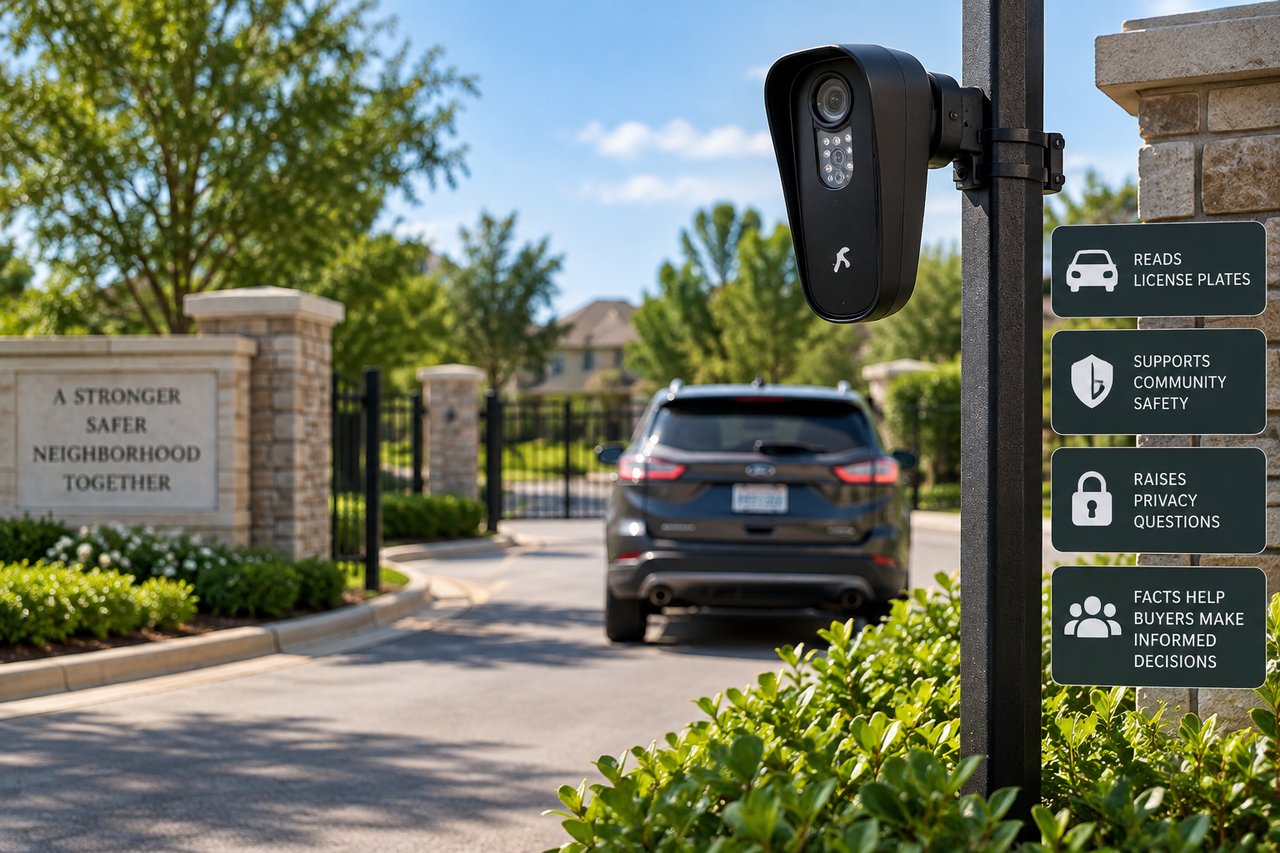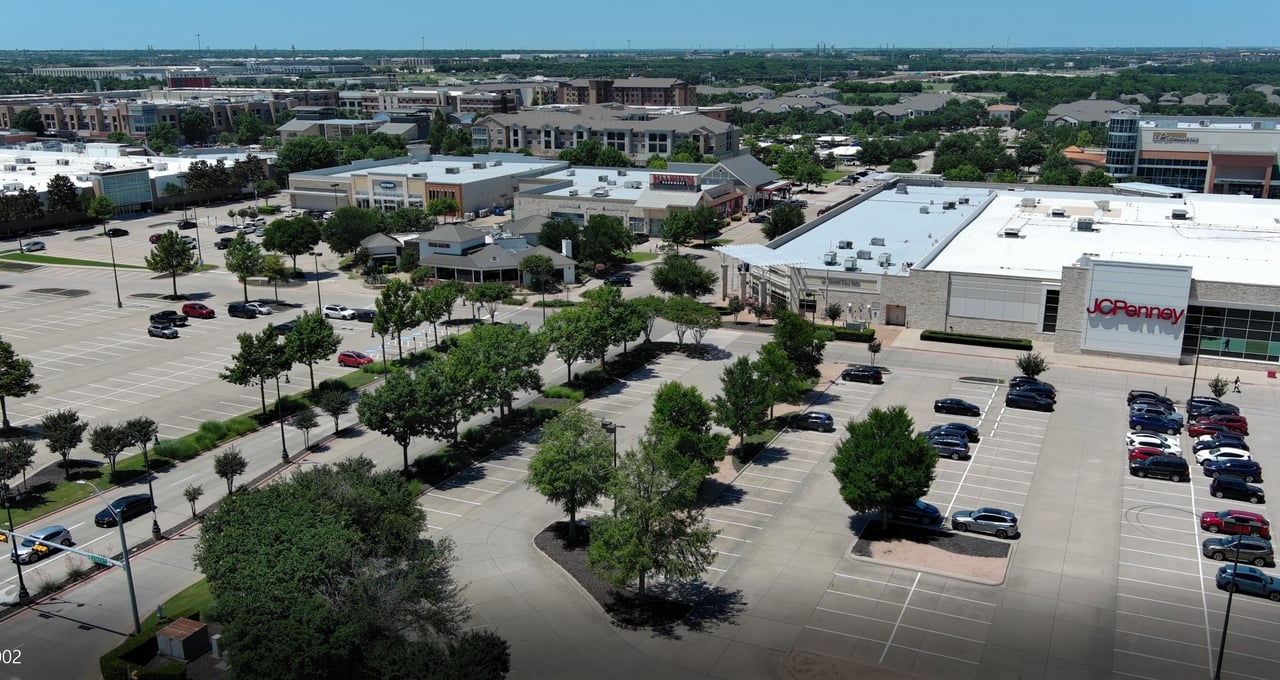

Over a period of a few months in 2008 and 2009, alongside a stretch of Central Expressway where it cuts through Allen and into Fairview, a huge mixed-use development appeared on the prairie. The project straddling Stacy Road—the Village at Fairview to the north, the Village at Allen to the south—now comprises about 3 million square feet of retail, office, residential, and hotel space. The developer, Dallas-based MGHerring Group, put in every detail prescribed by the manual of good urban design. Decorative lights stand over tree-lined streets. Parking has been consolidated into a centralized garage to promote walking. Fountains large and small offer the comforting sound of bubbling water. A plaza ringed with chess tables surrounds an oversize chessboard with accompanying supersize pawns, rooks, and knights. There are programmed activities for children and parents alike, and the retail tenants strike a balance between local businesses and national chain retailers.
It’s all there. And it all fails. Without a radical repurposing, the villages at Allen and Fairview, despite the dreamy demographics of Collin County, will die a slow death.
The shopping center at the villages is not the first of the new. It is the last of the old, a descendent of the shopping mall or the suburban strip center more than it is a “main street town center,” its lofty aspiration. And malls, save for a few regional examples (NorthPark, Galleria), are dying all over the country. In the two years before the villages opened, more than 400 of the largest 2,000 malls in the United States shuttered, and the recession hasn’t exactly halted that trend. Though on the surface the villages might not look like a traditional mall, it has the same bones.
The guiding force at the villages is convenience at the expense of all else. Despite the centralized parking garages intended to allow visitors to “park once,” to get out, walk around, and window shop, the abundance of parking everywhere means that people drive to their store of choice and leave. It’s impossible to find sanctuary that does not feel as though it is in the middle of a parking lot. That includes the dog park, the tot lot, and each of the “main streets.” Where authentic, successful main streets are places to spend time first and money second, the villages at Allen and Fairview are a place to get in and out of quickly.
The developers paid a lot of attention to the decorative elements but missed on all the critical elements. The villages eschew their bisecting main street, Stacy Road, and instead address the highway, internalizing its space, creating a drive-by experience. Fairview Station Parkway, a primary street through the northern Village at Fairview, becomes Allen Station Parkway as it bends southward and, rather than going through the Village of Allen, runs along the perimeter of the development like a typical ring road. Along the road, the developers tried to marry a few main street details with conventional shopping center strictures. The result is a bad compromise. It’s like a car-boat. Sure, it might be both, but it makes for a lousy car and an even worse boat. Even dying malls are an improved experience over this.
The landscaping is a great example of misapplying an element from the manual of good urban design. Overindulgent plantings of tall native grasses populate medians and parking islands throughout the project. For the driver not elevated above the grasses in an SUV, they make navigation nearly impossible—though the grasses are efficient catchers of the ubiquitous discarded by-product of consumption, plastic bags. On the recent day I visited, the only people moving around from shop to shop as the developers intended were the work crews cleaning garbage out of the landscaping.
Entering the Best Buy and walking out with a brand-new Blu-ray player was the highlight of my trip to the villages. Best Buys are placeless. They can be anywhere. I was temporarily transported to wherever that is while shopping but then was disappointed when I emerged from the store and was reminded where I really was, back in a parking lot of something like the Vegas Strip, a place designed to extract wealth, not make you feel at home.
If value extraction defined the 20th-century economy and, in turn, its places, the 21st century will be defined by value creation. The new value is place. Our cherished places of the next century will be those where people want to shop—but also meet, sit, or think. They aren’t interested in watching an endless stream of cars exchange prime parking spots. That’s boring. And boring places die. Then you’ve got a ghost town.