Turn on the news during a sharp stock market sell-off and you'll usually hear two questions almost immediately: How bad is it? And what does this mean for mortgage rates?
It's a fair question. Here's what typically happens.
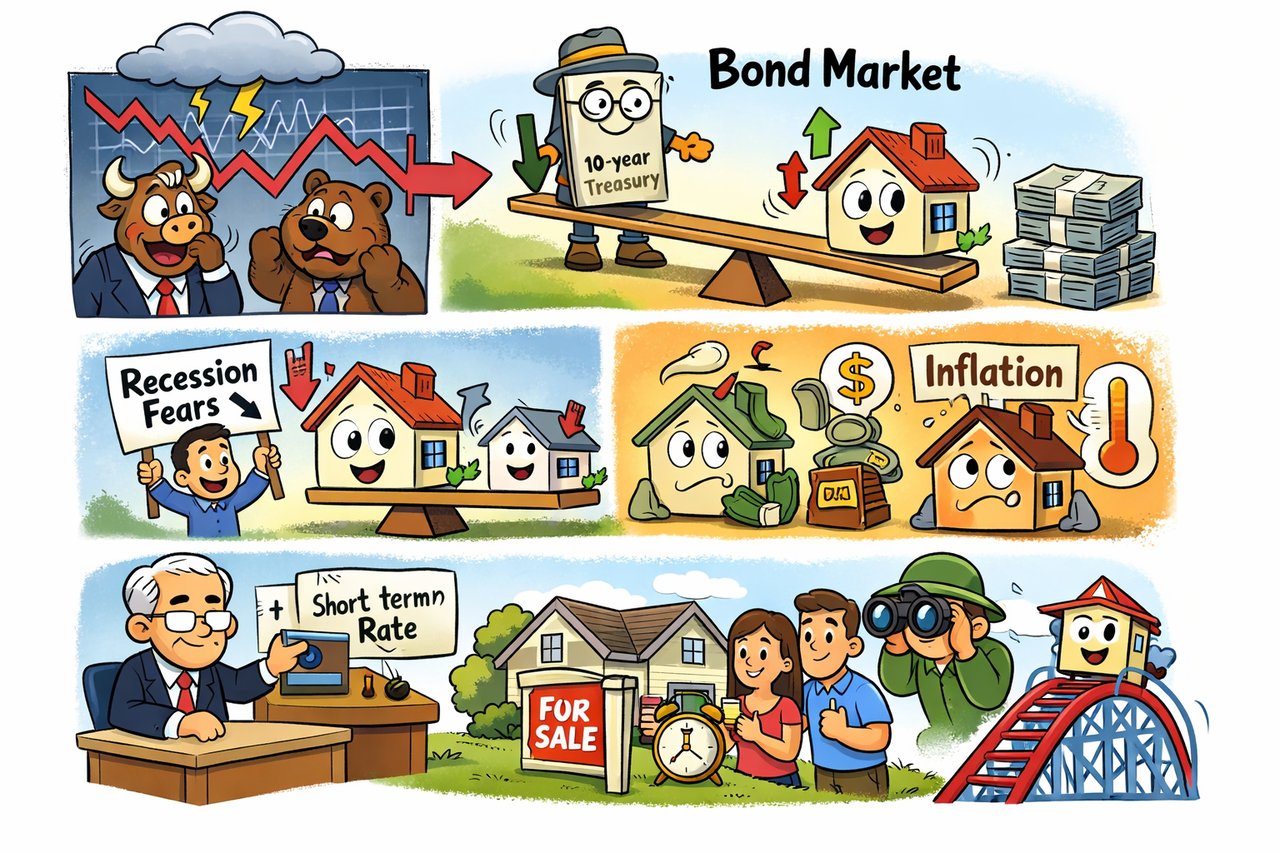
When stocks fall quickly, investors get nervous. Money moves out of riskier assets like equities and into safer ones. One of the primary safe havens during volatility is U.S. Treasury bonds. This matters because mortgage rates aren't directly tied to the stock market. They're much more closely tied to the bond market, specifically the 10-year Treasury yield.
When fear hits and investors pour money into bonds, bond prices go up. When bond prices go up, yields go down. Since mortgage rates follow those yields closely, they often drop along with them.
That's the normal pattern. But it doesn't always play out that cleanly.
If the sell-off is driven by inflation fears, mortgage rates may not budge much at all. Inflation is essentially the enemy of bonds. If inflation expectations rise, bond yields can stay elevated or even climb, regardless of what equities are doing. If the sell-off is more about recession fears, that's a different story. Recession concerns tend to push investors into bonds more aggressively, which can pull mortgage rates down more meaningfully.
The Federal Reserve plays a role here too, but probably not in the way most people think. The Fed doesn't set 30-year mortgage rates. It sets short-term rates, what's called the federal funds rate. Mortgage rates respond to longer-term bond expectations, inflation outlook, and overall economic confidence. A single Fed meeting rarely moves the needle the way people expect.
So what does this mean for us here in Collin County?
We've already seen how sensitive buyers are to rate movement in our market. A half-point improvement in rates can shift affordability meaningfully, especially in the move-up price ranges we see throughout Allen, Fairview, and Lovejoy ISD. When rates dip during a volatile stretch, serious buyers tend to act. Sellers who are prepared benefit. But these windows tend to be short. Markets often stabilize just as quickly as they dropped, and rates can bounce back within days.
Here's the bottom line: stock market volatility can create temporary opportunities in the mortgage market, but it's not a guaranteed path to lower rates and it's rarely a permanent shift.
Don't assume a market drop automatically means dramatically lower rates. Watch the bond market. Watch the inflation data. And run the numbers specific to your situation.
If you'd like to walk through how current rate movement affects your buying power or your pricing strategy, just give us a call. We're happy to break it down with real numbers.